
Colorado has some special and unique aspects that make it the best state in the nation. From its spectacular mountain peaks, to its vast open plains, to its bustling Front Range urban centers, Colorado is one of the most physically beautiful states. And while these vistas are critical to making us who we are, Colorado has another even more powerful ingredient that makes it special: If you look at Colorado’s story of economic growth, a critical pillar of it is how we lean in to support one another.
That’s a critical reason that Colorado has a claim to being the best state for entrepreneurs in the nation. This claim, however, faces a challenge of declining population and increasing concerns that businesses cannot thrive here, owing to unnecessary regulations, rising housing costs, and a lack of access to talented employees. As governor, I will be a tireless champion of Colorado as a great state to start, grow, and own a small business and emerging growth businesses as well.
In Colorado, the question “how can I help?” is one that citizens have long asked as they faced new frontiers. For ranchers and those mining gold, a fierce spirit of independence coexisted with a strong tradition of collaboration and supporting one another. It is what enabled them to thrive across Colorado. I have seen that same spirit again and again in our small business and startup communities across the state.
In the early 2000s, after the dot-com bust, I was part of a group of leaders, including Governor Jared Polis, who leaned in to support companies who decided to build their businesses in Colorado. A secret to our success in building a thriving ecosystem for startups—as embodied by Brad Feld, David Cohen, Nicole Glaros, and others who helped build TechStars and supported entrepreneurs here—is that we built on Colorado’s culture of “how can I help?”
When we brought the New Technology Meetup to the University of Colorado, for example, businesses presented their ideas and the audience generally asked and answered the same powerful question—“how can I help?” When Brad Feld and I founded Startup Colorado, one of our first initiatives was a Startup Summer program where businesses were asked to hire students and support them on their entrepreneurial journeys. Similarly, when Brad Bernthal and Jason Mendelson founded the New Venture Challenge at CU Boulder, students pitched their business ideas and business leaders asked “how can I help?”
This same spirit is what animated the founding of what we now call “the Bridge Entrepreneurs Network,” or BEN Colorado. It started with a $3 million grant I applied for to start the network and build a resource for emerging growth companies that answered the question “how can I help?” BEN Colorado, designed to partner Colorado entrepreneurs with the resources, guidance, and community partnership they need to grow has, to date, advised over 400 Colorado companies. Through its Signature Program, it has supported the growth of more than $8 billion of revenue and the employment of more than 20,000 Coloradans.
The promise of supporting startups and new small businesses across Colorado is important to me. That’s why, after founding Startup Colorado within the Silicon Flatirons Center as a way to create connections between startup companies in Denver, Boulder, Fort Collins, and Colorado Springs, I worked to expand our focus to supporting startups all across Colorado through “startup weeks” in Grand Junction, Durango, and other parts of the state. That spirit has continued as BEN Colorado is now collaborating with Startup Colorado on Rural Reach supporting traditionally underserved entrepreneurs beyond the Front Range. I was delighted to witness that spirit up close this fall when I joined the West Slope Startup Week in Durango as a keynote speaker.
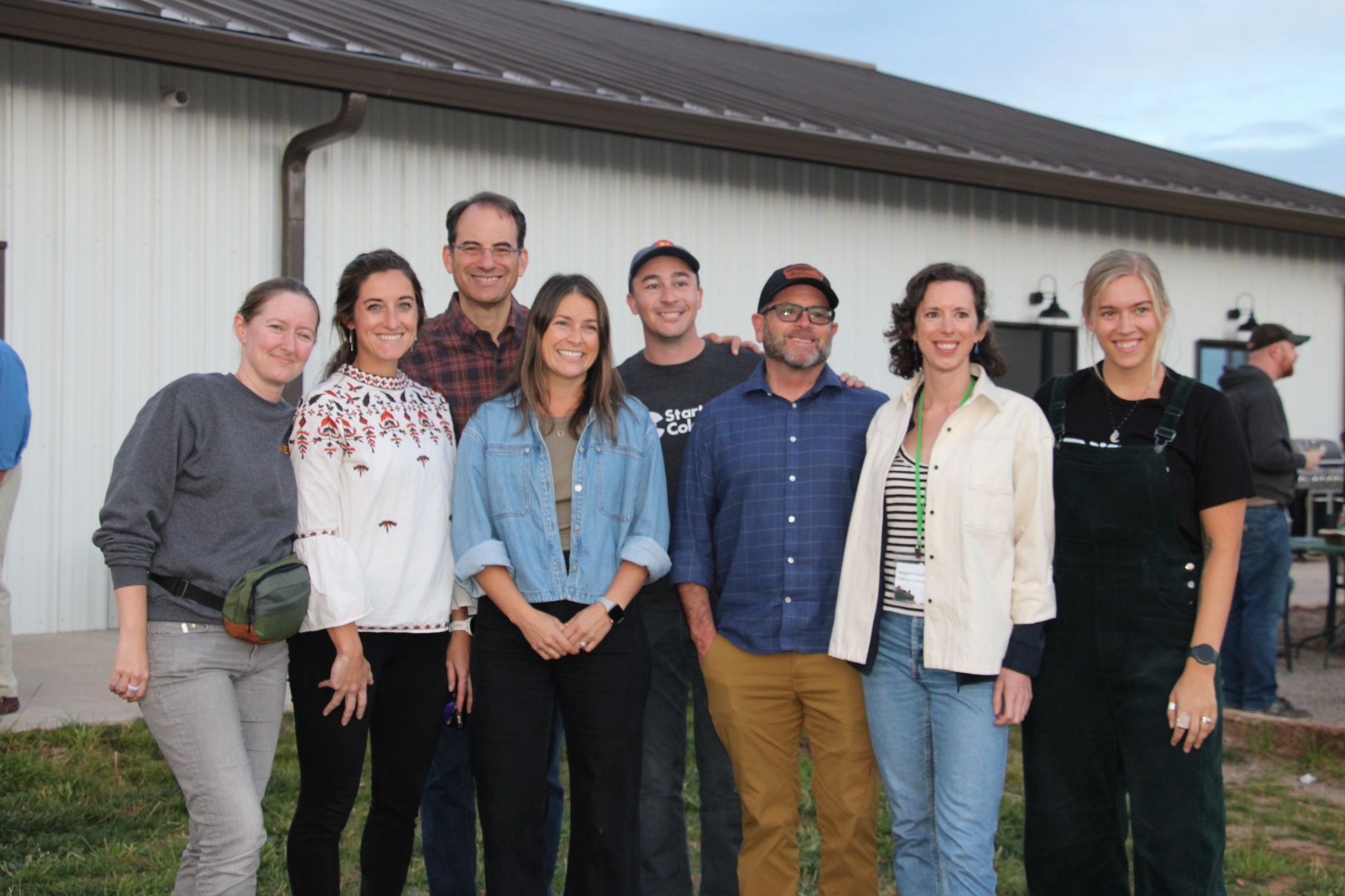
As Governor, I will work hard to advance economic opportunities across Colorado, not just in the Front Range. That’s why, on day 1 of my governorship, I will appoint a Director of Rural Affairs and Collaboration. Even as opportunities for extractive industries decline, technological changes and new opportunities for businesses will emerge, with innovation in how we use water, grow and market food, as well as in our outdoor recreation economy.
As we think about ways to support Colorado’s small business and startup entrepreneurs, we have powerful local resources we can build on. In a place like Fremont County, southwest of Colorado Springs, that might look like the AgStart Program, which brings together and supports local agriculture leaders, education partners, and community connections. In other parts of the state, that might look different, with local efforts to develop food technology, clean energy and outdoor recreation.
It is also important that we create and support opportunities for entrepreneurs we have historically failed to support. That’s why I have leaned in to support AccessMode, which provides support and mentorship for entrepreneurs from backgrounds less likely to found a company. As the Trump Administration promotes its false narrative that diversity and inclusion programs are illegal and detrimental, here in Colorado we must do more to support entrepreneurs from underrepresented groups. With our culture of supporting one another, if we are intentional and invite connection, we can develop a truly inclusive business ecosystem.
As Governor, I will work to foster a regulatory environment where all startups can grow without facing regulatory burdens and challenging compliance requirements that can undermine their development. This means, as developed in the Colorado Privacy Act, for example, that we must create balanced exemptions for early stage startups and small entrepreneurs that ensure they can grow before they are saddled with burdensome and disparate compliance requirements. In short, new businesses should not be forced to hire lawyers and accountants just to understand the rules and before dollar one is earned. Similarly, the cost and time to obtain permits for growth should not be so burdensome that it is more efficient to grow outside the state.
I recognize that our state government is sometimes part of the challenge facing businesses, creating burdensome requirements and difficulties in navigating administrative systems. As Governor, I will work with our Chief Innovation Officer and our Office of Economic Development to listen to concerns from businesses that getting the necessary authorizations from our state government can be time-consuming, involving wasteful and duplicative efforts, and frustrating red tape. I am also committed to ensuring that we review existing regulations that affect those small businesses that are already up and running to ensure that they are operating effectively and work to remove those that create unnecessary burdens. This effort can also include how we work to harmonize regulatory frameworks across governments so that small businesses should not have to manage through conflicting regulatory regimes to expand into the next town or county. Consider, for example, that a small business delivering 50 packages across three counties and three towns may be required to comply with nine different regulatory compliance regimes.
Finally, we need to work on how to create an environment where emerging businesses can find and hire workers who can afford to live in communities across Colorado, and particularly in communities close to work. To that end, I have developed concrete, actionable workforce development, education and housing policy plans. By addressing all of these interrelated challenges facing our state we can ensure Colorado reaches its full potential as a small business and entrepreneurial beacon for the nation.
* * *
Over my time in Colorado, I have embraced our cultural norm of showing up, listening, collaborating, and supporting (“how can I help?”) our small businesses and startups. As Governor, I will work tirelessly to build a climate that nurtures and promotes these norms. I will also fight to ensure that all Colorado communities—urban and rural—and all Colorado entrepreneurs—regardless of scale, race or gender—have the tools, access, education and capabilities they need to thrive. And that will include a sustained effort to reduce burdens that are making it harder for our small and growing businesses to succeed.